• Home
  • Books
  • Blog
  • Connect
  • Bio
Menu

Jordan Morgan

Street Address
City, State, Zip
Phone Number
Wife. Mama. Author.

Your Custom Text Here

Jordan Morgan

  • Home
  • Books
  • Blog
  • Connect
  • Bio

Losing and Finding Yourself in Motherhood

July 7, 2023 Jordan Morgan

Motherhood is a transformative experience that can challenge and change a woman in many ways. For many women, the transition to motherhood can be a time of both finding and losing oneself, as the demands and responsibilities of motherhood can both enrich and overwhelm the individual. And that is okay. The journey of motherhood isn’t the same for any two women and it’s time we acknowledge and honor that.

Finding oneself:

  • Identity and purpose: For many women, motherhood can provide a sense of identity and purpose, and can give meaning and direction to life. When becoming a mother, some women gain a new and profound sense of responsibility and connection and can find a sense of purpose and fulfillment in their role as a mother.

  • Strength and resilience: Motherhood can be a demanding and challenging experience and it can require strength and resilience to navigate the ups and downs. By facing and overcoming the challenges of motherhood, a woman can develop and grow and she can find a new level of strength and resilience within herself.

  • Creativity and expression: Motherhood can provide opportunities for creativity and expression and it can allow a woman to explore new aspects of herself. By engaging in activities that fill her cups (such as writing, art, music, reading, or yoga) a mother can express her thoughts and feelings and can find new outlets for creativity and self-expression.

Losing oneself:

  • Loss of autonomy: Motherhood can require a significant amount of time, energy, and attention, and can leave little room for personal autonomy. For many women, the transition to motherhood can involve a loss of autonomy, as the demands of motherhood can take precedence over personal interests and goals.

  • Loss of identity: Motherhood can be a defining experience, and can shape a woman's identity in many ways. For some women, the transition to motherhood can involve a loss of identity, as the demands and expectations of motherhood can eclipse other aspects of the individual's identity. This can be particularly challenging for women who have previously defined themselves by their careers, relationships, or other roles.

  • Loss of connection: Motherhood can be a rewarding and fulfilling experience, but it can also be isolating and lonely. For many women, the transition to motherhood can involve a loss of connection, as the demands of motherhood can limit opportunities for socializing, networking, and other forms of connection. This can be particularly challenging for women who have previously relied on social connections for support, fulfillment, and meaning.

Motherhood is a transformative experience that can challenge and change a woman in many ways; and remember, that’s okay. For a lot of us, the transition to motherhood can be a time of somehow both finding and losing oneself. Whether you are finding new aspects of yourself or losing old ones, motherhood can be a time of growth, change, and self-discovery.

I wish you nothing but the best on your journey, Mama.
Comment

Yoga and Body Positivity: Embracing Yourself as You Are

June 19, 2023 Jordan Morgan

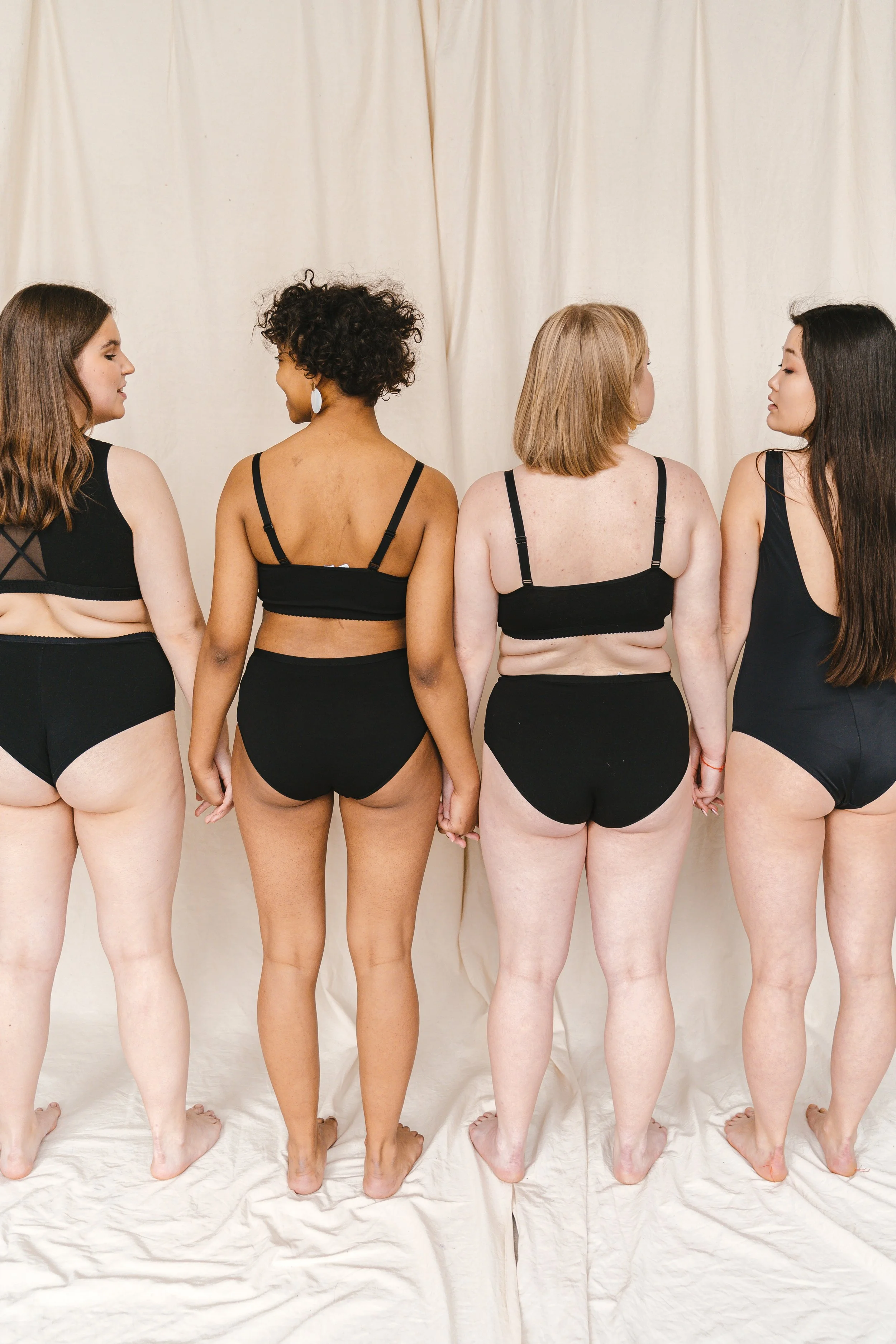
Yoga is a practice that is often associated with physical and mental well-being, but for many people, the prospect of doing yoga can be intimidating. Many of us have body image issues or concerns about our ability to do the postures, and this can make it difficult to fully embrace our practice. However, it is important to remember that yoga is not about achieving a certain physical appearance or level of ability. Yoga is about honoring and accepting our bodies and learning to love and appreciate ourselves exactly as we are.

One of the key aspects of yoga is the concept of ahimsa or non-harming. This means treating ourselves and others with kindness and compassion and avoiding actions or thoughts that cause harm or suffering. In the context of our yoga practice, this means treating ourselves with kindness and compassion and avoiding judgment or criticism of our bodies or our abilities.

In order to fully embrace our practice and our bodies, it is important to cultivate a positive and accepting mindset. This means letting go of judgments and comparisons and focusing on the present moment and our own experience. It means being gentle and compassionate with ourselves and recognizing that our bodies are capable and worthy, exactly as they are.

One way to cultivate this mindset is through the practice of self-acceptance. This means accepting ourselves and our bodies, flaws and all. It means recognizing that our bodies are unique and perfect in their own way and that they deserve to be loved and appreciated.

Another way to cultivate body positivity in our yoga practice is through the practice of self-care. This means taking care of our bodies and our minds and treating ourselves with kindness and respect. It means engaging in activities and practices that nourish and support us, and avoiding those that harm or undermine us.

Yoga and body positivity go hand in hand. By embracing our bodies and our practice, and treating ourselves with kindness and compassion, we can cultivate a positive and accepting mindset that allows us to fully enjoy the benefits of our yoga practice.

Remember, yoga is not about achieving a certain physical appearance or level of ability. It is about honoring yourself.

Comment

The Benefits of Yoga For Women's Health

June 2, 2023 Jordan Morgan

Yoga is a practice that has been shown to have a wide range of benefits for physical and mental health. For women, yoga can provide specific benefits related to the unique challenges and changes that we experience throughout our lives. Whether you are a young woman dealing with the stresses of daily life, a pregnant woman preparing for childbirth, a mom chasing children, or a woman in menopause, yoga can provide support and nourishment for your body and mind.

One of the key benefits of yoga for women is improved physical health. Yoga can help to improve flexibility, strength, and balance, which can help to prevent injuries and chronic conditions such as back pain and arthritis. Yoga can also help to improve cardiovascular health and increase lung capacity, which can support overall health and well-being. No matter your age, yoga is a great practice to start!

In addition to physical benefits, yoga can also provide emotional and psychological benefits for women. Yoga can help to reduce stress and anxiety and can improve mood and overall well-being. The breathing and relaxation techniques that are used in yoga can be particularly helpful for women who are dealing with the challenges of daily life or the hormonal changes of pregnancy and menopause.

Another benefit of yoga for women is improved body awareness and body image. Yoga can help women develop a more positive and accepting relationship with their bodies and it can provide a sense of connection and self-acceptance. For women who have experienced trauma or body image issues, yoga can provide a safe and supportive space to explore their physical and emotional selves.

Finally, yoga can provide social and community benefits for women. Many yoga classes and studios offer a supportive and inclusive environment for women and can provide a sense of community and connection. For women who may be isolated or lonely, especially women in the postpartum phase of life, the social aspect of a yoga practice can provide valuable support and connection.

In conclusion, yoga has many benefits for women's health, both physical and emotional. Whether you are a woman dealing with the stresses of daily life, a pregnant woman preparing for childbirth, a mom chasing children, or a woman in menopause, yoga can provide support and nourishment for your body and mind. By incorporating yoga into your daily routine, you can improve your physical health, reduce stress and anxiety, and cultivate a positive and accepting relationship with your body.

Comment

Yoga For Busy Women: Quick and Easy Routines

May 29, 2023 Jordan Morgan

For women with busy schedules, and lots of children, finding the time and energy for a regular yoga practice can be challenging. However, the benefits of yoga are well-documented, and even a short, simple yoga practice can have a positive impact on your physical and mental well-being! If you are a woman with a busy schedule, here are a few quick and easy yoga routines that you can incorporate into your day:

Sun Salutations

Sun Salutations, or Surya Namaskar, is a series of postures that are often used as a warm-up in yoga classes. The sequence can be adapted to suit different levels of ability and can be done in as little as five minutes. To do a basic Sun Salutation, start in Mountain pose, with your feet hip-width apart and your hands by your sides. Inhale and raise your arms overhead, then exhale and bend forward, bringing your hands to the ground. Inhale and step or jump back into a plank position, then exhale and lower into a low push-up or Chaturanga. Inhale and lift your chest into Upward-Facing Dog, then exhale and press back into Downward-Facing Dog. Hold for a few breaths, then inhale and step or jump forward to come back into a forward fold. Exhale and straighten your legs, then inhale and raise your arms back overhead. Exhale and release your arms back to your sides. Repeat the sequence as many times as you want and feel free to add variations or modifications as needed.

Seated Forward Bend

The Seated Forward Bend, or Paschimottanasana, is a simple and gentle pose that can be done from a seated position. To do this pose, sit on the floor with your legs extended in front of you. Inhale and lengthen your spine, then exhale and hinge forward from the hips, bringing your chest toward your thighs. You can hold onto your feet, your shins, or a strap if you are unable to reach your feet. Hold the pose for a few breaths, making sure you aren’t locking your knees and causing extra stress, then inhale and lift your chest to come back to an upright position. Repeat the pose a few times, and feel free to add a forward bend to the backbend or a side bend to add some variation. You can also use blocks underneath your forehead to create pressure on your third eye - it’s niiiice.

Child’s Pose

Child's Pose, or Balasana, is a restful and calming pose that can be done at any time. It is especially beneficial for prenatal and postnatal women! To do this pose, start on your hands and knees, with your wrists under your shoulders and your knees under your hips. Inhale and lift your chest, then exhale and lower your hips back toward your heels. You can keep your arms extended in front of you or bring your arms back alongside your body. Hold the pose for a few breaths, then inhale and lift your chest to come back to an upright position. Repeat the pose a few times, and feel free to add a bit of side extension by lengthening your child’s pose to the left and right while breathing into your upper ribs.

Busy women need to take care of themselves, too! I hope you can use these yoga routines for women with busy schedules and see the positive impact that just a few minutes of yoga can bring into your life.

Namasté friends!

Comment

Ayurveda: How it impacts your body and personality

May 15, 2023 Jordan Morgan

Ayurveda is a holistic system of medicine that originated in India over 5,000 years ago. Ayurveda focuses on bringing balance and harmony to the body, mind, and spirit, and is based on the belief that good health is the natural state of the human body.

One of the key concepts in Ayurveda is the idea of doshas. Doshas are the three fundamental energies or principles that are believed to govern the body and mind. These doshas are called Vata, Pitta, and Kapha, and each person is thought to have a unique combination of these doshas.

The Vata dosha is associated with movement, creativity, and flexibility. People with a predominance of Vata tend to be energetic, spontaneous, and quick-thinking. However, they can also be prone to anxiety and insecurity.

The Pitta dosha is associated with transformation, metabolism, and intelligence. People with a predominance of Pitta tend to be focused, ambitious, and analytical. However, they can also be prone to anger and irritation.

The Kapha dosha is associated with structure, stability, and strength. People with a predominance of Kapha tend to be calm, stable, and grounded. However, they can also be prone to lethargy and attachment.

The balance of the doshas in the body is thought to be affected by factors such as diet, lifestyle, and the environment. When the doshas are in balance, a person is thought to be healthy and happy. However, when the doshas are out of balance, a person may experience physical or emotional symptoms.

One way to bring balance to the doshas is through Ayurvedic practices such as meditation, yoga, and herbal remedies. These practices can help to restore harmony to the body and mind and can improve overall health and well-being.

Another way to bring balance to the doshas is through Ayurvedic nutrition. Ayurveda places a strong emphasis on the importance of diet in maintaining good health and recommends eating according to your unique combination of doshas. For example, a person with a predominance of Vata may benefit from eating warm, nourishing foods, while a person with a predominance of Pitta may benefit from eating cooling, refreshing foods.

The doshas are a fundamental concept in Ayurveda and are believed to govern the body and mind. By understanding your unique combination of doshas, you can take steps to bring balance and harmony to your body and mind, and improve your overall health and well-being.

Do you know your dosha? Here is a simple free quiz to find out!

Comment
← Newer Posts Older Posts →

Follow me on Facebook